अकाउंटिंग में सभी लेन-देन Cash, Bank, Purchase या Sales से संबंधित नहीं होते। कई बार ऐसी Entries करनी पड़ती हैं जिनमें केवल Accounts का Adjustment करना होता है। उदाहरण के लिए—
- वर्ष के अंत में Depreciation लगाना
- Outstanding Salary दर्ज करना
- Prepaid Insurance का Adjustment करना
- गलत Entry को सुधारना (Rectification)
- Interest Accrued की Entry करना
- Provision बनाना
- Capital से Drawings Adjust करना
ऐसी सभी Entries के लिए Journal Voucher (F7) का उपयोग किया जाता है।
Journal Voucher को अकाउंटिंग का सबसे महत्वपूर्ण Voucher माना जाता है क्योंकि यह Financial Statements को सही और Accurate बनाने में महत्वपूर्ण भूमिका निभाता है।
Journal Voucher वह Voucher है जिसका उपयोग उन Accounting Entries के लिए किया जाता है जिनमें सीधे Cash या Bank का लेन-देन नहीं होता, बल्कि केवल Accounts का Adjustment किया जाता है।
सरल शब्दों में—
जब किसी लेन-देन में Cash या Bank का उपयोग नहीं होता और केवल Ledger Accounts को Debit तथा Credit करना होता है, तब Journal Voucher (F7) का उपयोग किया जाता है।
मान लीजिए आपकी Ekta Computer Institute ने एक Computer ₹80,000 में खरीदा था।
एक वर्ष बाद उसकी Value कम होकर ₹68,000 रह गई।
अब ₹12,000 का Depreciation दर्ज करना होगा।
इस Entry में न Cash दिया जा रहा है और न Bank से भुगतान हो रहा है।
इसलिए यह Entry Journal Voucher में की जाएगी।
Journal Voucher का उपयोग कब किया जाता है?
Journal Voucher का उपयोग निम्न परिस्थितियों में किया जाता है—
- Depreciation Entry
- Outstanding Expenses
- Prepaid Expenses
- Accrued Income
- Income Received in Advance
- Provision for Bad Debts
- Rectification Entry
- Transfer Entry
- Closing Adjustment
- Opening Adjustment
- Year-End Adjustment
Journal Voucher खोलने का तरीका
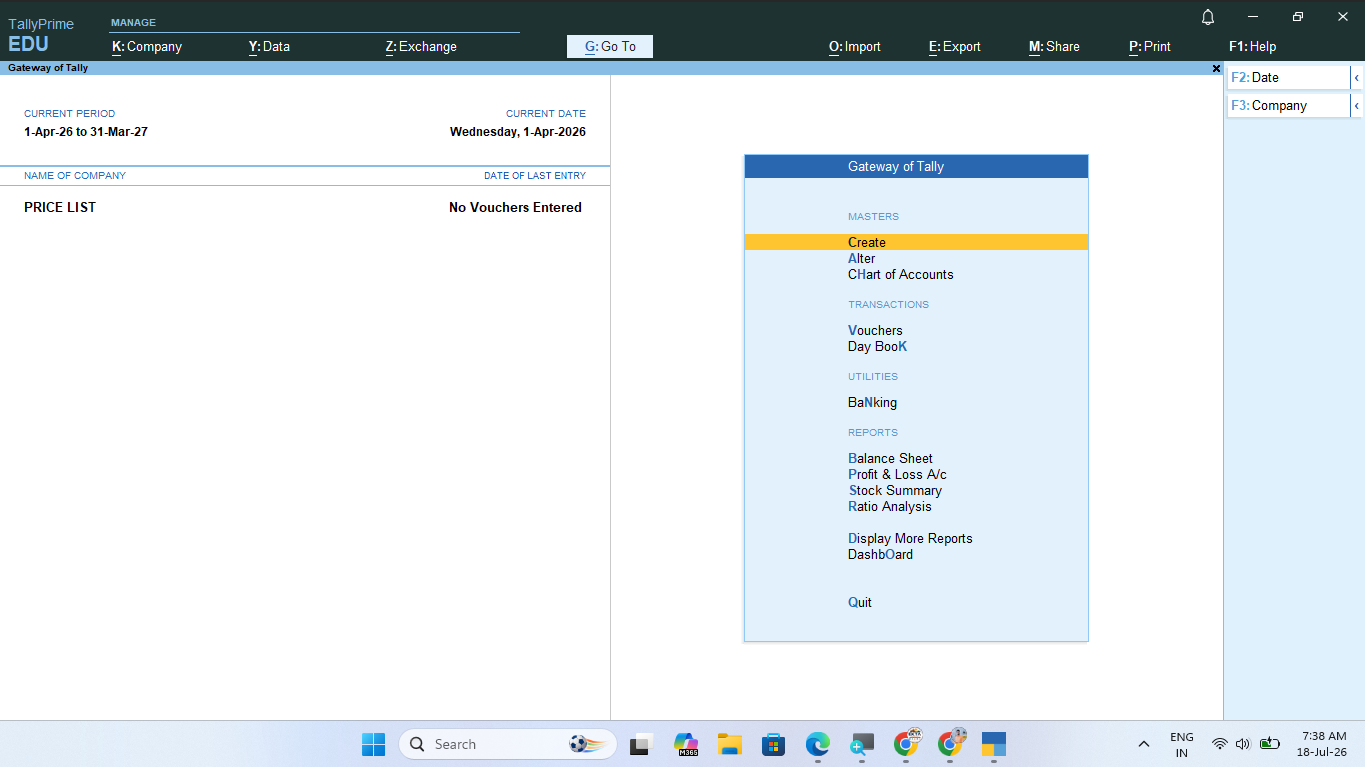
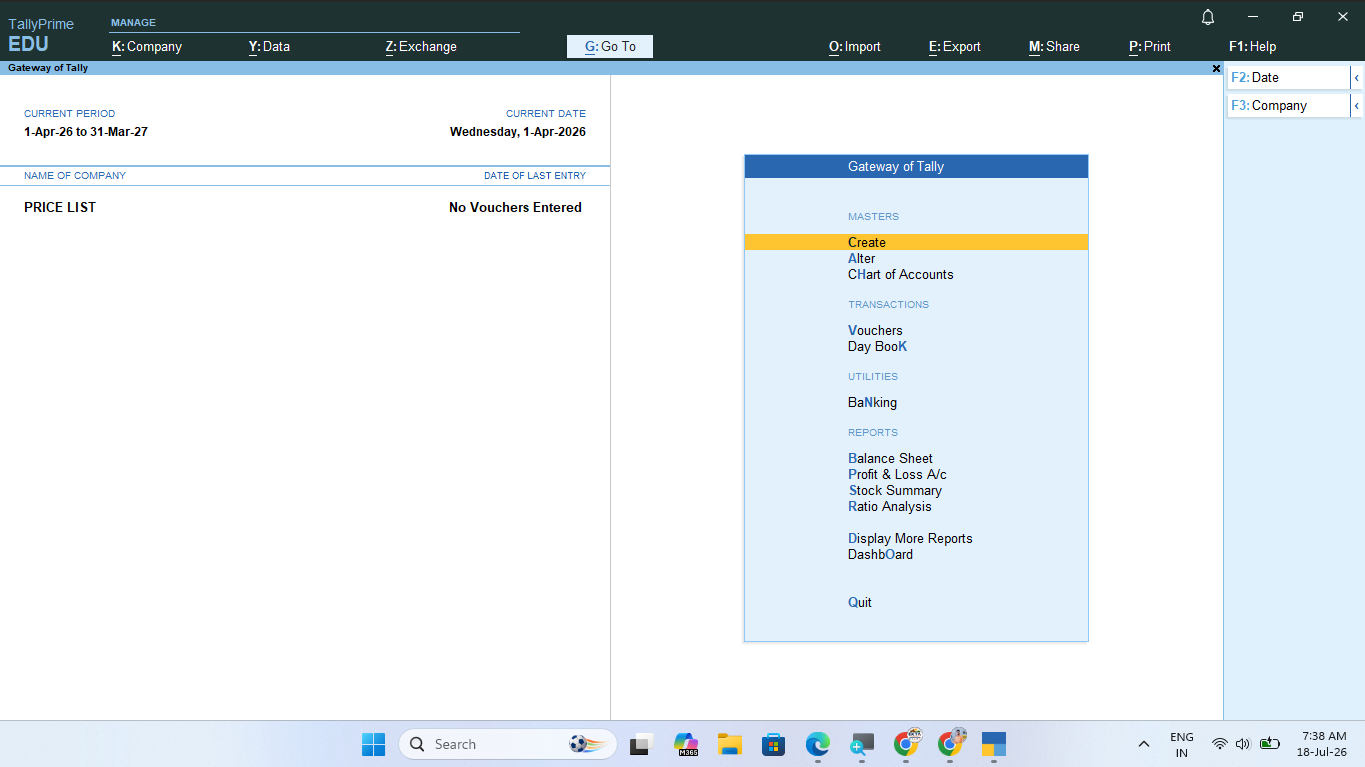
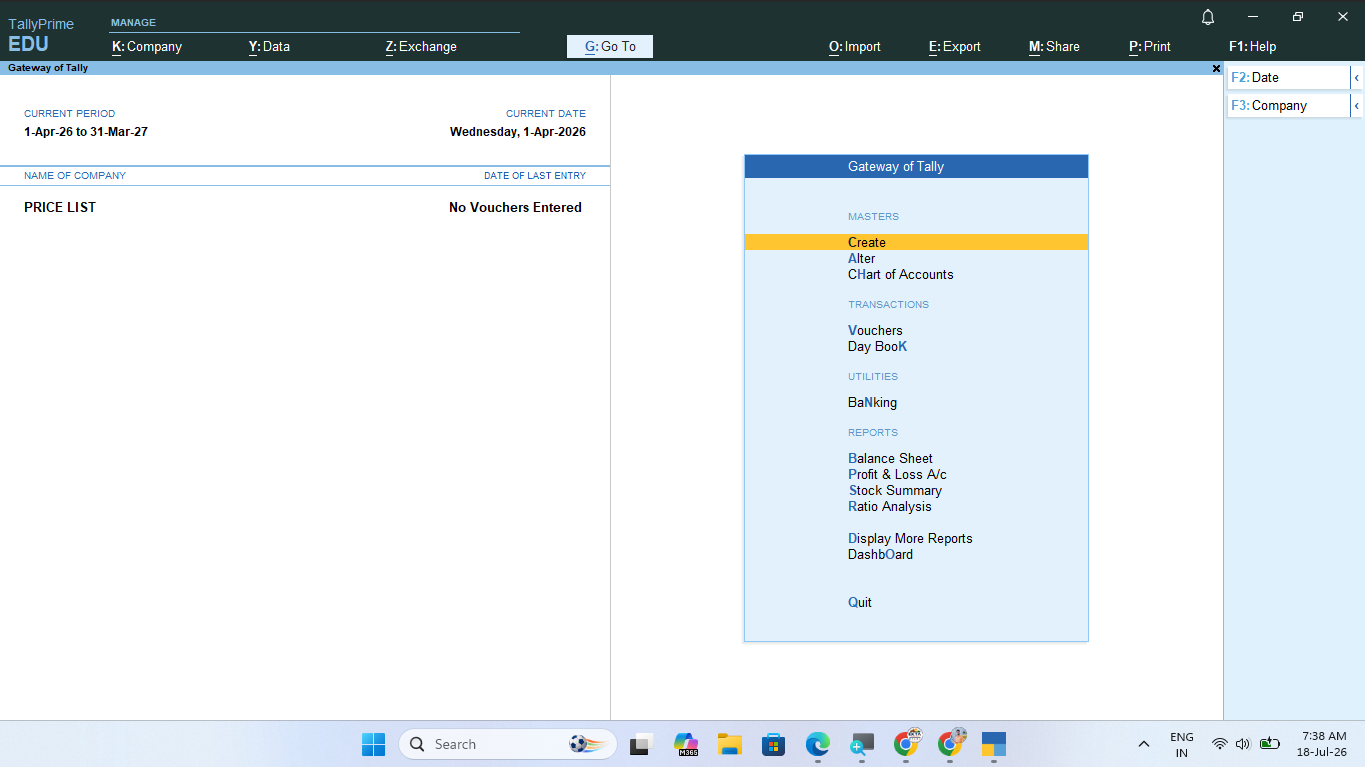
Gateway of Tally
↓
Vouchers
↓
Journal (F7)
Gateway of Tally
↓
Create Voucher
↓
Journal
F7
Journal Voucher के मुख्य विकल्प
Journal Voucher में सामान्यतः निम्न फ़ील्ड होती हैं—
- Date
- Voucher Number
- Debit Ledger
- Credit Ledger
- Amount
- Narration
Journal Voucher (F7)
↓
Date चुनें
↓
Debit Ledger चुनें
↓
Credit Ledger चुनें
↓
Amount दर्ज करें
↓
Narration लिखें
↓
Ctrl + A से Save करें
Journal Entry करते समय हमेशा यह याद रखें—
Debit the Receiver, Credit the Giver
या
Expense & Loss → Debit
Income & Gain → Credit
Practical Example 1 – Depreciation Entry
Furniture Cost = ₹1,00,000
Depreciation = ₹10,000
Debit
Depreciation Expense ₹10,000
Credit
Furniture ₹10,000
Narration
Being depreciation charged on furniture for the financial year.
Practical Example 2 – Outstanding Salary
मार्च महीने का Salary ₹40,000 अभी तक कर्मचारियों को नहीं दिया गया।
Debit
Salary Expense ₹40,000
Credit
Outstanding Salary ₹40,000
इससे Expense वर्तमान वर्ष में शामिल हो जाएगी, जबकि भुगतान बाद में होगा।
Practical Example 3 – Prepaid Insurance
Insurance Premium ₹24,000 पूरे वर्ष का दिया गया।
वर्ष के अंत तक ₹6,000 अगले वर्ष से संबंधित है।
Debit
Prepaid Insurance ₹6,000
Credit
Insurance Expense ₹6,000
Practical Example 4 – Interest Accrued
FD पर ₹5,000 ब्याज बन चुका है लेकिन बैंक ने अभी भुगतान नहीं किया।
Debit
Interest Receivable ₹5,000
Credit
Interest Income ₹5,000
Practical Example 5 – Income Received in Advance
Student ने अगले महीने की Course Fee ₹15,000 अभी जमा कर दी।
Debit
Course Fee Income ₹15,000
Credit
Advance Fee Received ₹15,000
बाद में जब Course शुरू होगा, तब इसे Income में Transfer किया जाएगा।
Practical Example 6 – Provision for Bad Debts
Customers से ₹2,50,000 प्राप्त होने हैं।
अनुमान है कि ₹5,000 वसूल नहीं होंगे।
Debit
Bad Debts Expense ₹5,000
Credit
Provision for Bad Debts ₹5,000
Practical Example 7 – Rectification Entry
Electricity Bill ₹3,000 गलती से Office Rent में दर्ज हो गया।
Debit
Electricity Expense ₹3,000
Credit
Office Rent ₹3,000
Practical Example 8 – Transfer Entry
वर्ष के अंत में Profit ₹2,00,000 को Capital Account में Transfer करना है।
Debit
Profit & Loss Account ₹2,00,000
Credit
Capital Account ₹2,00,000
- Financial Statements सही बनते हैं।
- Year-End Adjustment आसान होती है।
- Auditor को सभी Adjustment Entries स्पष्ट दिखाई देती हैं।
- Profit & Loss सही बनता है।
- Balance Sheet वास्तविक स्थिति दर्शाती है।
- Accounting Standards का पालन आसान होता है।
Journal Voucher और Payment Voucher में अंतर
|
आधार |
Journal Voucher |
Payment Voucher |
|
Shortcut |
F7 |
F5 |
|
Cash/Bank |
सामान्यतः नहीं |
होता है |
|
Adjustment |
हाँ |
नहीं |
|
Depreciation |
हाँ |
नहीं |
|
Outstanding Expenses |
हाँ |
नहीं |
Journal Voucher और Contra Voucher में अंतर
|
आधार |
Journal |
Contra |
|
Shortcut |
F7 |
F4 |
|
उद्देश्य |
Adjustment |
Cash ↔ Bank Transfer |
|
Cash/Bank |
सामान्यतः नहीं |
हमेशा Cash/Bank |
|
Year-End Entry |
हाँ |
नहीं |
❌ Debit और Credit उल्टा कर देना।
❌ Adjustment Date गलत रखना।
❌ Narration न लिखना।
❌ Journal की जगह Payment Voucher का उपयोग करना।
❌ Outstanding Expenses को सीधे Payment में दर्ज करना।
❌ Depreciation को Asset Purchase समझ लेना।
✔ प्रत्येक Journal Entry का Supporting Document रखें।
✔ Year-End Adjustments Audit से पहले Verify करें।
✔ Narration स्पष्ट और संक्षिप्त लिखें।
✔ Debit और Credit Amount हमेशा बराबर रखें।
✔ Journal Register की समय-समय पर समीक्षा करें।
Ekta Computer Institute ने वर्ष के अंत में निम्न Adjustments किए—
- Computer पर Depreciation
- Outstanding Electricity Bill
- Prepaid Internet Charges
- Staff Salary Payable
- Interest Receivable
इन सभी Entries को Journal Voucher (F7) में दर्ज किया गया क्योंकि इनमें सीधे Cash या Bank का लेन-देन नहीं था।
अक्सर पूछे जाने वाले प्रश्न—
- Journal Voucher की Shortcut Key क्या है?
- Depreciation किस Voucher में दर्ज की जाती है?
- Outstanding Salary की Entry कहाँ होती है?
- Rectification Entry क्या होती है?
- Journal Voucher का उपयोग कब किया जाता है?
- Journal और Payment Voucher में क्या अंतर है?
|
विषय |
जानकारी |
|
Voucher |
Journal |
|
Shortcut |
F7 |
|
उपयोग |
Adjustment Entries |
|
Cash/Bank |
सामान्यतः नहीं |
|
Depreciation |
Journal |
|
Outstanding Expenses |
Journal |
|
Save |
Ctrl + A |
- Journal Voucher का परिचय
- F7 Shortcut Key
- Depreciation Entry
- Outstanding Expenses
- Prepaid Expenses
- Accrued Income
- Income Received in Advance
- Provision for Bad Debts
- Rectification Entry
- Transfer Entry
- Common Mistakes
- Professional Tips
- Journal Voucher क्या है?
- Journal Voucher और Payment Voucher में क्या अंतर है?
- Depreciation की Entry कैसे करते हैं?
- Outstanding Expenses क्या होती हैं?
- Rectification Entry क्यों आवश्यक होती है?
- Journal Voucher में Cash Account का उपयोग कब किया जाता है?
- Adjustment Entry का उद्देश्य क्या है?
अब हम Tally Prime में Debit Note (Ctrl + F9) और Credit Note (Ctrl + F8) को विस्तार से सीखेंगे। इसमें शामिल होगा—
- Debit Note क्या है?
- Credit Note क्या है?
- Purchase Return Entry
- Sales Return Entry
- GST सहित Return Entries
- Supplier Return
- Customer Return
- Replacement और Damage Goods की Accounting
- Practical Business Examples
- Common Mistakes
- Professional Tips
- Interview Questions
यह अध्याय वास्तविक व्यापार, GST Compliance और Return Management के लिए अत्यंत महत्वपूर्ण है और हर Accountant को इसकी पूरी समझ होनी चाहिए।